
Ah, the British lawn – a symbol of pride for many UK homeowners. A well-maintained lawn not only boosts the aesthetic appeal of a property but also provides a refreshing space for family and pets to relax. And when it comes to ensuring the optimum health of your lawn, the unsung hero is often the humble lawn aerator.
What is lawn aeration
Lawn aeration is one of the most important operations and a vital ingredient for a healthy vigorous lawn. This task is carried out with a lawn aerator which creates air channels into the root zone allowing air to pass into the soil. A lawn aerator can be either a hand held tool such as a garden fork or a complex powered machine. Which ever type you use the objective is exactly the same, which is to increase the amount of air space in the soil or root zone, very important for a healthy lawn. This has the following benefits for the lawn:
- Relieves compaction.
- Reduce thatch build up and helps with the breakdown of thatch.
- Improves drainage.
- Increases drought resistance.
- Promotes desirable grass species such as Bent & Fescue.
- Hollow tining helps to improve the soil structure when used in conjunction with top dressing.
Simply put, a lawn aerator is a garden tool designed to create holes in the soil, thus allowing water, nutrients, and air to penetrate deeper and nourish the grass roots. If you’ve ever wondered why some lawns seem to have an inexplicably lush and vibrant green hue, a big part of that magic could be regular aeration.
For more information on the benefits of this lawn care task please visit our lawn aeration page.

Types of lawn aerators
 An example of hollow tine aeration where the cores have been removed and left in rows ready for removal.
As previously mentioned there are two types of implements used to aerate lawns and turf, hand held tools and powered machinery.
- Hand held lawn aerator – These types of lawn aerator can include a simple garden fork, a hollow tine fork and push aerators mounted onto a cylindrical framework. All have their uses and can prove invaluable in the right circumstances especially for small lawns or localised problem areas. The main drawback with these implements (especially the garden and hollow tine fork) is that they are very labour intensive especially if you have a large area of lawn to aerate.
- Powered lawn aerator – These machines can range from simple to engine powered aerators to high tech machines which can be self powered or vehicle mounted as used by lawn care professionals. These aerators are ideal for large lawns which are too large to aerate with hand held implements. The obvious drawback with these machines are the cost. However in many cases they can be hired from local dealers as their frequency of use on garden lawns is much lower than in the turf care industry.
The main types of aerators according to the principle of operation are as follows:
- Spike Aerators: As the name suggests, these use spikes to puncture holes into the ground. Picture a drum with protruding spikes that roll across the lawn. While they don’t remove soil, they’re useful for less compacted areas.
- Plug/Core Aerators: A bit more aggressive, these remove plugs (or cores) of soil from the lawn, creating channels for air, water, and nutrients. This type is ideal for lawns experiencing severe compaction or those with clay-heavy soil.
The choice between spike and plug aerators will depend on your lawn’s specific needs. For regular maintenance, a spike aerator might suffice. However, if you’re tackling a lawn that hasn’t seen much love in years, a core aerator can make a world of difference.
Types of lawn aeration techniques
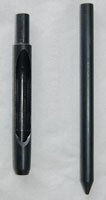 The two most common tines used, on the left a hollow tine and on the right a solid tine.
There are many types of lawn aeration used throughout the turf care industry, some use conventional tines, others inject air and water into the soil. However we will concentrate on the two most common operations used on lawns, these are solid tining and hollow tining.
- Solid tining – Also known as spiking is the most common type of lawn aeration and can be carried out with a garden fork or purpose built lawn aerator. This type of aeration does not remove any spoil, it just creates air channels into to root zone. The depth of penetration can be varied depending on what want to achieve, a typical depth being about 4 inches or 100mm.
- Hollow tining – This type of aeration actually removes cores of thatch/soil from the lawn and is often carried out as part of an autumn lawn care program. Ideal for a thatch removal program and prior to top dressing a lawn. More labour intensive than spiking as the spoil has to removed from the lawn.
For more information on the timing and benefits of these two lawn aeration techniques please visit our lawn aeration page.
Does a Lawn Aerator Really Work?
The burning question for many: is this just another garden gadget or a legitimate tool? In short, yes, lawn aerators work – and they work wonders.
Here’s why:
- Enhanced Soil Absorption: By breaking up compacted soil, water can penetrate deeper. This means no more water puddling on your lawn after a downpour.
- Stronger Grass Roots: With increased access to air, nutrients, and water, grassroots grow deeper, leading to a more resilient lawn.
- Reduced Water Runoff: Aerated lawns can absorb water better, reducing wastage due to runoff.
- Improved Resistance: A well-aerated lawn is more resistant to diseases and pests.
For instance, consider the local community park, frequented by families and pets daily. Over time, areas of the park become compacted and worn. The groundskeepers, understanding the need for rejuvenation, often use core aerators to revitalise these patches. The result? A park that remains green and inviting, despite heavy usage.
